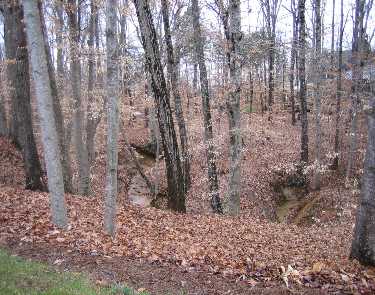
Winter Colors, Greensboro, NC
(#0251)
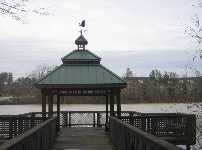
Jeanette Lake, Greensboro, NC
(#0253)

Sunrise over the Atlantic
Southport, NC
(#0347)
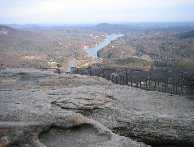
View from Chimney Rock,
Hickory Nut Gorge,
Rutherfordton, NC
(#0276)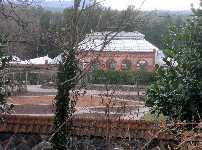
Conservatory, Builtmore Mansion,
Asheville, NC
(#0284)

Sketchbook impressions
of Pilot Rock State Park, NC
(#0501)

Sketchbook impressions of
Southport, NC
(#0502) |
North Carolina
1527 words
Nothin' Is Finer Than North Carolina In the Winter
by Dianne Roth
“Nothin’” may be finer than to be in Carolina in the spring, but Carolina in the winter is still pretty fine. It is true that you will need your woolies and fleece to be comfortable, but you might just stick in a pair of shorts as well.
In mid January, a friend picked me up at the Raleigh-Durham airport and spirited me away to her home in Greensboro. It was nighttime, so my first sight of the land was the next morning. It was cold and dry so I dressed warmly and headed out on an early morning walk.
My first impression of North Carolina was brown, but a closer look showed many shades of winter ochre and a bright blue sky. Coming from Oregon greys, it was beautiful.
Heading down hill, I followed the Old Lake Jeannette Road hoping to find its namesake. I was rewarded with a lake side trail into the trees. A short distance more and I found a gazebo built at the end of a small pier. It was an invitation to capture the heron wind vane, songbird nesting boxes, and the mix of evergreen and deciduous trees in my pocket sketchbook. What I love about sketching is that I also captured the sound of birds and the whisper of dry leaves in the cold breeze.
Since I came to the lake in a roundabout way, my next adventure was finding my way back home. After several false headings and a small sense of panic rising in my throat, I made a turn that was familiar. I reminded myself to bring bread crumbs next time to mark my trail.
With a leisurely breakfast, we loaded the car and headed west. Our plan was to wander westward and end up at Asheville by dinner time. Mostly we traveled along Interstate 40, but at the junction of NC 64 we headed SW to Rutherfordton and then to Chimney Rock Park, located in Hickory Nut Gorge. The top of Chimney Rock is accessible by trail for the hearty, but anyone can reach the top using a 26 story elevator inside the mountain. The views from this privately owned park are spectacular and a bit of a surprise to a non-native who thought the Carolinas were flat. Scenes from “The Last of the Mohicans”, “Firestarter”, and “A Breed Apart” were filmed in the park.
After the climb up and back down, we were back on the road to Asheville.
Asheville has been a destination since its incorporation in 1797. Sitting at the meeting point of the Blue Ridge Mountains and the Great Smokies, it offers easy access to outdoor activities as well as a rich heritage of fine arts, folk talents, and mountain crafts.
We followed a portion of the Asheville Urban Trail system that meanders through downtown and highlights historical, cultural, business, and natural points of interest. Trail markers are embedded into the sidewalk and a map is available at local hotels.
The highlight of our stay in Asheville was a visit to the Biltmore Estate, the largest house in the US. Begun in 1889, by George Vanderbilt, it was finished in time for Christmas, 1895. Still in the Vanderbilt family, the home is open for tours, weddings, and banquets.
With a hand-held interpretive guide, you are treated to stories about the house, the grounds, and famous guests. Period music is available at the touch of a finger and voices from the past make the house’s spirits come alive. The grounds are inviting and the conservatory, with a fruiting orange tree, was a toasty sketching refuge after the cold wind blowing through the gardens.
Another day, we headed north on highway 52, to Pilot Mountain near the Tennessee border. The road brings you nearly to the top of the mountain, but the area has trails around the pinnacle, self-guided nature walks, and challenging rock climbing. Besides hiking, there are equestrian trails, canoeing, fishing, and interpretive programs. The vistas include everything from distant mountains to tiny farms 1400’ below.
In the weeks following, exploring was done on my own. With sketchbook in hand, I drove from my home base in Fayetteville, southeast on NC 53. I enjoyed fields with rolls of hay, pocosins (highland, as opposed to lowland, swamps), peat beds, forests of pine and oak, and small villages with manor houses and shacks. Porches were everywhere. I occasionally stopped to collect a brushful of brilliant red clay to paint across a page for later sketching.
About 45 minutes out of Fayetteville is Bladen Lakes State Park. The lakes in the park are oval and all lie in approximately the same orientation having been formed by an ancient meteor shower. The meteors apparently all hit at the same angle and made “cookie cutter” lakes.
In Wilmington, NC, I found the Atlantic. It was lined with a mix of early 1900 beach cottages, early 2000 beach mansions, and condos. Access to the beach has been maintained with frequent parking areas and trails over the dunes. However, I was looking for something a bit more flavorful than chain motels so I headed south.
Highway 17 is the straight shot down the inland coast, but I took the slower, more interesting coastal route through the towns and villages along the Atlantic. I made many stops to sketch the colors of sand, sea, and sky, and to look for a night’s lodging in a local motel. These were all fishing villages so the landscape was decorated with boats, nets, traps, and all manner of fishing gear.
Wandering, visiting, and sketching took me as far as Myrtle Beach on the South Carolina shore. Still, I had not found a place to spend the night. It seems that independent motels are being bought up, torn down, and “all the comforts of home” being built in their place. I headed back north.
I began to get cranky around dinner time when I realized that my choice was a motel just like the one in my hometown or sleeping in my car.
In the dark, I pulled into a Walgreen’s in Southport, North Carolina. “Is there a family motel in town?” The blank looks confirmed the worst. Then a local pointed me due east, “until you can’t go any farther.” I pulled into the parking lot and it was just what I was looking for. A string of rooms with parking spaces at the doors. It was not fancy or new. It was white with green shutters, the floor was uneven, the bathroom sink was nearly in your lap as you used the toilet, and I was delighted. Sad to say, it has been bought, will be torn down, and, you guessed it, will be replaced with a condo within the year.
First thing in the morning, before the sun, I was up and out. I have watched the sun set over the Pacific and I wanted to watch it rise over the Atlantic. I was alone as I walked along the waterfront in the dark. Trees and gabled houses were silhouetted against the lightening sky that turned from steel greys to vivid pinks and oranges. I walked several miles, capturing the new day with colored pencils and my camera.
In my sketchbook is a large, plywood ice cream cone. It makes me sad knowing that with the new condo, all quaint evidence of yesteryear will disappear. My sketchbook records, “What will happen when all of the plywood ice cream cones are gone?”
Filled with relish for the wonderful day ahead of me, I decided to take the local ferry to wherever it went. I was first in line at the ticket booth and was greeted by the woman from Walgreens who directed me to the motel. We had a long chat about changing times, my sketchbook, and the ferry schedule. The destination was Fort Fisher on the tip of the peninsula that leads to the Wilmington waterfront, just where I wanted to go.
The ferry trip was cold and windy and delicious. The sea smells, the sights along the coastline, the busy shipping channel, and the sea birds were just what I needed. The flavor of the North Carolina coast was still to be savored, if only for a short time more.
Wilmington’s waterfront is a rich with activity, shopping, and sunshine. I switched from wool socks to sandals and traded my fleece in for a t-shirt. I sketched children playing in a water fountain, police officers on horseback, and a victorian carriage driven by a local in stovepipe hat and bow tie. I picniced on the promenade, wandered through interesting shops, and breathed deeply of the fresh Atlantic air. Time and circumstance being what they were, I was not able to visit the Great Smokies. Days were short, trails slippery, and weather iffy. Nor could I explore the Outer Banks of North Carolina’s northern coastline or the many state parks that invite hiking. My only consolation is that I will someday return to North Carolina. With mountains and coastline still unexplored, how could it be otherwise.
Dianne Roth is a teacher, mother, grandmother, and freelance
writer. She lives in Oregon.
|
|